How the Right School Environment Shapes a Child’s Academic and Personal Growth
November 15, 2026 2026-11-15 13:32How the Right School Environment Shapes a Child’s Academic and Personal Growth
How the Right School Environment Shapes a Child’s Academic and Personal Growth
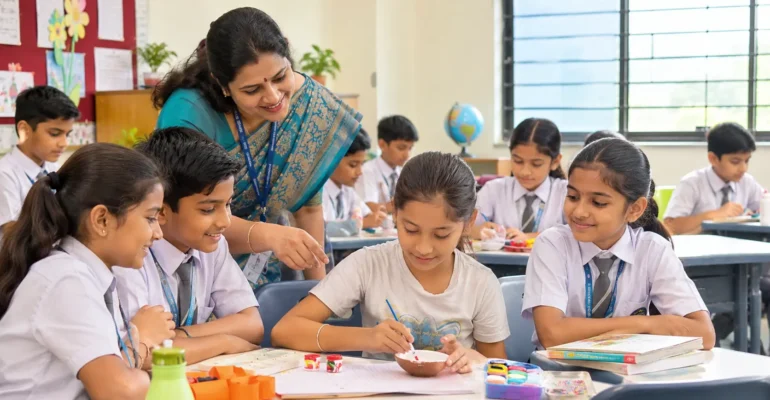
Choosing the right school is one of the most important decisions parents make for their children. A school is not just a place where students learn subjects, complete assignments, and prepare for examinations. It is an environment where children develop their personalities, build confidence, learn discipline, improve communication skills, and discover their interests and abilities.
The environment in which a child studies plays a significant role in shaping their attitude towards learning and life. Supportive teachers, positive classroom interactions, meaningful learning experiences, and opportunities for personal development can help children become confident, responsible, and independent individuals.
For parents exploring quality education in Niwai and nearby areas of Tonk, Rajasthan, selecting the right English Medium School in Niwai involves looking beyond examination results. It is equally important to understand how a school supports children’s emotional, intellectual, social, and personal development.
A positive school environment encourages students to ask questions, express their opinions, participate in activities, and learn from their experiences. When children feel comfortable and supported, they are more likely to develop a genuine interest in education and build a strong foundation for their future.
In this article, we explore how the right school environment contributes to academic success, personality development, communication skills, and overall growth, along with what parents should consider when selecting a school for their children.
How Does a School Environment Influence Academic Growth?
A child’s academic performance depends on several factors, including teaching methods, classroom atmosphere, learning resources, teacher support, and individual motivation. A positive school environment creates conditions in which students can understand concepts, develop curiosity, and improve their academic abilities.
Positive Classroom Environment
A welcoming and organised classroom encourages students to participate without hesitation. When children feel comfortable asking questions and sharing ideas, learning becomes more interactive and meaningful.
An encouraging classroom atmosphere can help students overcome their fear of making mistakes. Instead of memorising information only for examinations, they gradually develop the ability to understand concepts and apply their knowledge.
Supportive Teachers and Effective Guidance
Teachers play an essential role in a child’s academic journey. Their guidance, encouragement, and teaching approach can influence how students understand subjects and approach challenges.
Supportive teachers help students identify areas where they need improvement and encourage them to work towards their learning goals. They also motivate children to develop good study habits, maintain discipline, and become more responsible learners.
Interactive and Practical Learning
Learning becomes more effective when students actively participate in the educational process. Discussions, classroom activities, examples from everyday life, and problem-solving exercises can make difficult concepts easier to understand.
Interactive teaching also encourages independent thinking and helps students develop the confidence to express their understanding.
Curiosity and Independent Thinking
A good learning environment encourages children to explore new ideas and ask questions. This curiosity helps develop analytical thinking, creativity, and problem-solving abilities.
Consistent academic guidance, regular practice, and positive reinforcement can gradually improve a child’s confidence and academic performance.
The Role of School in Personality Development
Academic knowledge is important, but a child’s personality is equally essential for long-term success. Schools provide opportunities for children to interact with different people, understand responsibilities, express themselves, and develop important life skills.
Personality Development in School is a gradual process that takes place through classroom participation, communication, teamwork, discipline, and everyday experiences.
Self-Confidence and Communication Skills
Children develop confidence when they receive opportunities to express their thoughts, ask questions, and participate in discussions. Positive encouragement helps them overcome hesitation and communicate more effectively.
These experiences also strengthen their ability to interact with teachers, classmates, and people outside the school environment.
Leadership and Teamwork
Group assignments, collaborative activities, and classroom responsibilities can help students understand teamwork and leadership.
Children learn to listen to others, share responsibilities, respect different opinions, and work towards common goals.
Creativity and Critical Thinking
A supportive educational environment gives students opportunities to explore their interests and approach problems from different perspectives.
Creative thinking helps children develop original ideas, while critical thinking enables them to evaluate information and make informed decisions.
Discipline and Responsibility
School routines help children understand the importance of punctuality, consistency, organisation, and responsibility.
These habits contribute to their personal development and prepare them to manage future academic and professional responsibilities.
Social and Emotional Development
Interactions with classmates help children understand cooperation, empathy, respect, and emotional awareness.
They gradually learn how to handle disagreements, appreciate differences, and build healthy relationships.
Why English Medium Education Matters in Today’s World
English communication has become an important skill in higher education, technology, professional environments, and international communication.
An English-medium learning environment can help students become familiar with English through regular exposure to classroom instructions, reading materials, discussions, and written assignments.
Parents looking for a Top English Medium School Near NEWAI should consider how the school encourages students to develop practical language skills rather than focusing only on textbook knowledge.
Developing English Communication Skills
Regular exposure to English can help children improve their vocabulary, pronunciation, reading, writing, and listening abilities.
Students who receive opportunities to communicate in English can gradually become more comfortable expressing their ideas.
Supporting Higher Education
English proficiency can be helpful when students pursue higher education, particularly in academic programmes where textbooks, research materials, and lectures are available in English.
Strong language skills also make it easier to access educational resources and understand subject-related information.
Building Future Opportunities
English is widely used in many professional and academic environments. Developing communication skills during school years can help students prepare for future interviews, presentations, collaborative projects, and professional interactions.
However, language development should be a gradual process. Children should receive encouragement and opportunities to practise without feeling embarrassed about mistakes.
Importance of Sports and Extracurricular Activities
Education should not be limited to textbooks, homework, and classroom examinations. Sports and extracurricular activities contribute to children’s physical, social, emotional, and creative development.
A balanced educational experience gives students opportunities to discover their interests, learn new skills, and develop confidence beyond academic subjects.
Sports and Physical Fitness
Sports and physical activities encourage children to maintain an active lifestyle. They also teach important values such as discipline, patience, teamwork, and determination.
Participation in games helps students understand the importance of practice, cooperation, and accepting both success and failure positively.
Cultural and Creative Activities
Creative activities allow children to explore their imagination and express themselves. Art, music, dance, craft, and cultural programmes can help students discover interests that may not always become apparent through classroom learning.
Such experiences also encourage creativity and self-expression.
Public Speaking and Stage Confidence
Participating in presentations, debates, storytelling, and cultural programmes can help students overcome stage fear.
These experiences improve communication skills and encourage children to express their ideas in front of others.
Teamwork and Leadership
Group activities teach children how to cooperate, share responsibilities, respect different perspectives, and work towards common objectives.
These qualities support their future academic, personal, and professional development.
Balancing Academics and Activities
The objective should be to create a healthy balance between academic learning and extracurricular participation. Parents and teachers can work together to ensure that children receive opportunities to explore their interests without compromising their studies.
What Should Parents Look for in a School Environment?
Finding the Best School Near Newai requires parents to evaluate more than the school’s location, admission fees, or reputation. They should understand whether the institution provides an environment where children feel encouraged, supported, and motivated to learn.
Here are some important factors to consider.
1. Safe and Supportive Learning Spaces
Children should feel comfortable and secure in their school environment. Parents should observe the overall atmosphere and understand the school’s approach towards student safety, discipline, and well-being.
2. Positive Student-Teacher Relationships
Teachers should be approachable and willing to understand individual learning needs. A healthy relationship between students and teachers encourages children to communicate openly and seek academic support when necessary.
3. Teaching Methodology
Parents should understand how teachers explain concepts and engage students in the classroom.
Look for teaching approaches that encourage participation, practical understanding, critical thinking, and curiosity rather than relying entirely on memorisation.
4. Academic Standards
A school should have a structured approach to curriculum delivery, assessments, regular learning activities, and academic improvement.
Parents can ask how student progress is evaluated and how additional support is provided when children face learning difficulties.
5. Communication Between Parents and Teachers
Regular communication helps parents understand their child’s progress, behaviour, strengths, and areas requiring improvement.
A healthy partnership between parents and teachers creates consistency between home and school learning.
6. Individual Attention
Every child has a different learning speed, personality, and set of abilities. Parents should explore whether the school recognises individual differences and encourages students according to their needs.
7. Values and Discipline
Respect, honesty, punctuality, responsibility, and kindness are essential qualities that children should develop during their school years.
A positive school environment reinforces these values through everyday interactions and guidance.
Why Quality Private School Education Matters in Niwai and Tonk
Parents searching for quality education in Rajasthan increasingly consider how a school can prepare their children for academic challenges and future opportunities.
In areas such as Niwai and Tonk, selecting a suitable private school involves understanding the institution’s educational approach, teaching standards, learning environment, and commitment to student development.
When searching for the Best Private School in Newai Tonk, parents should consider the following aspects.
Structured Academic Learning: A planned curriculum and consistent teaching approach help children build subject knowledge step by step.
Student-Centred Teaching: Children learn more effectively when teaching methods consider their interests, learning abilities, and individual progress.
Educational Resources: Classrooms, learning materials, reading resources, and suitable educational facilities can support a more engaging learning experience.
Communication and Personality Development: Students should have opportunities to express their ideas, communicate confidently, participate in discussions, and develop social skills.
Academic and Personal Growth: Quality education should encourage intellectual development alongside discipline, creativity, responsibility, and positive values.
Parents looking for the Best School Near Tonk should compare schools by visiting their campuses, speaking with teachers, understanding the curriculum, and evaluating how students are encouraged to grow.
The right choice is not necessarily the school making the biggest promises. It is the institution whose educational approach genuinely matches the child’s needs and future aspirations.
Govind Madhav Global School – Supporting Children’s Learning and Development in Niwai
A school worth exploring for parents in Niwai and nearby areas of Tonk
Govind Madhav Global School (GMGS) is located at Barthala Tiraha, Niwai Road, Niwai, Tonk, Rajasthan. The school presents its educational approach around academic foundations, interactive learning, confidence, values, and the overall development of children.
For parents exploring an English Medium School in Niwai, GMGS is an option worth considering when comparing educational environments in the region.
According to the school’s published information, its educational approach highlights several areas:
Focus on Academic Foundations
GMGS emphasises building strong foundations in different subjects to support students’ future academic progress. A strong academic foundation helps children develop subject understanding and prepares them for progressively advanced learning.
Interactive Learning Environment
The school’s website describes an approach that includes engaging and interactive teaching methods. Such approaches can encourage students to participate actively and develop a better understanding of classroom concepts.
Holistic Development
The school highlights the importance of academics, creativity, values, communication, and life skills. This broader approach recognises that education should support children’s development beyond examination performance.
Confidence and Educational Values
Developing confidence, discipline, curiosity, and responsibility is an important part of children’s school experience. These qualities can help students become more independent and responsible learners.
Partnership Between Parents and Teachers
Parents play an important role in children’s educational development. Regular communication with teachers and active involvement in the learning journey can help identify strengths and areas where additional guidance may be beneficial.
GMGS is located in Niwai, making it relevant for parents exploring school options in Niwai and nearby parts of Tonk.
Parents can visit the school’s website and contact the admission team to understand its current academic programmes, admission requirements, teaching approach, and available facilities before making a decision.
Explore GMGS Niwai: Official School Website.
How Parents Can Support Their Child’s Growth Alongside School Education
A child’s development is a shared responsibility between parents and teachers. While schools provide structured learning experiences, the home environment plays an equally important role in developing good habits, confidence, and curiosity.
Parents can support their children’s growth through these simple practices.
1. Encourage daily reading: Develop a reading habit through storybooks, educational materials, newspapers, and age-appropriate books. Reading improves vocabulary, comprehension, and language skills.
2. Develop good study habits: Establish a consistent study routine and provide a comfortable space for homework, revision, and independent learning.
3. Support creative interests: Encourage children to explore drawing, music, sports, writing, and other activities according to their interests.
4. Encourage communication: Allow children to express their opinions, ask questions, share experiences, and participate in family conversations.
5. Stay connected with teachers: Attend parent-teacher meetings and discuss academic progress, classroom participation, and areas that need attention.
6. Create a positive learning atmosphere: Avoid unnecessary pressure and encourage children to view mistakes as opportunities to improve.
7. Celebrate progress: Appreciate effort, consistency, improvement, and achievements instead of focusing exclusively on examination marks.
When parents and schools work together, children receive better guidance and encouragement throughout their educational journey.
Frequently Asked Questions (FAQs)
1. Why is the school environment important for a child’s development?
The school environment influences how children learn, communicate, interact, and develop confidence. A positive environment encourages academic progress, discipline, creativity, social skills, and emotional development.
2. How does an English-medium school help students?
An English-medium school provides regular exposure to English through classroom teaching, reading, writing, and communication. This can help students improve language proficiency and prepare for higher education and future professional opportunities.
3. What makes a good English Medium School in Niwai?
A good English-medium school should offer a supportive learning environment, effective teaching methods, academic guidance, positive teacher-student relationships, communication opportunities, and a focus on overall student development.
4. How can parents identify the Best Private School in Newai Tonk?
Parents should evaluate teaching quality, curriculum, learning environment, student safety, academic approach, communication with teachers, available resources, and opportunities for personality development. Visiting the school is also helpful.
5. Why is personality development important in school education?
Personality development helps children build confidence, communication skills, leadership abilities, discipline, teamwork, and emotional awareness. These qualities are valuable throughout life.
6. How do schools support academic and extracurricular development?
Schools can support academic growth through structured teaching, assessments, classroom participation, and academic guidance. Sports, cultural activities, creative opportunities, and group participation can contribute to children’s overall development.
7. How can I find the Best School Near Newai?
Start by shortlisting schools in and around Newai, reviewing their educational approach, visiting campuses, speaking with teachers, and comparing academic standards, student support, safety, and facilities.
8. Where is Govind Madhav Global School located in Niwai?
Govind Madhav Global School is located at Barthala Tiraha, Niwai Road, Niwai, Tonk, Rajasthan – 304021. Parents can contact the school at 78787 09052 for admission-related enquiries.
Conclusion: Building a Strong Foundation for Your Child’s Future
A child’s school years are about much more than completing a syllabus or achieving good examination results. They are an important stage for developing knowledge, confidence, communication skills, discipline, creativity, and positive values.
The right school environment encourages children to explore their abilities, learn from experiences, build meaningful relationships, and prepare for future responsibilities.
For parents exploring quality education in Niwai and Tonk, it is important to choose a school that recognises the value of both academic achievement and personality development.
Govind Madhav Global School, Niwai, is worth exploring for families seeking an educational environment that emphasises academic foundations, interactive learning, values, and holistic student development.
Visit the school, understand its educational approach, and discuss your child’s learning needs with the admission team.
Give your child the opportunity to learn, grow, and build a confident foundation for tomorrow.
Contact Govind Madhav Global School (GMGS), Niwai
- Address: Barthala Tiraha, Niwai Road, Niwai, Tonk, Rajasthan – 304021, India
- Phone: 78787 09052
- Email: gmgsniwai@gmail.com
- Website: https://gmgsniwai.com/